Craft beer has evolved into an exciting world of flavors, brewing techniques, and regional styles, giving beer enthusiasts more choices than ever. Among the most popular options, Hazy IPAs and West Coast IPAs stand out for their distinctive hop characteristics, aromas, and drinking experiences. Although both belong to the India Pale Ale family, they offer noticeably different approaches to showcasing hops.
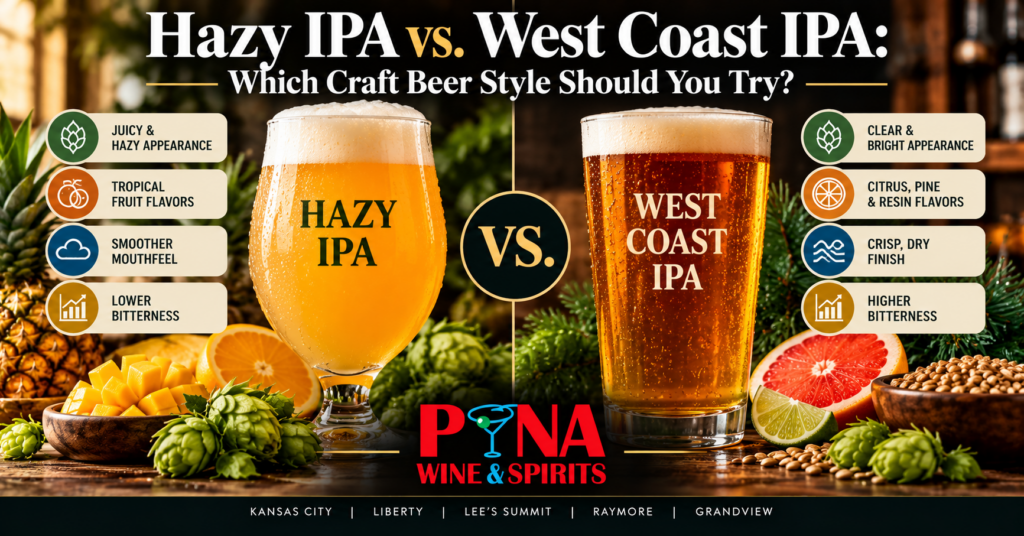
Understanding Hazy IPA vs. West Coast IPA starts with recognizing the differences in bitterness, appearance, mouthfeel, and flavor. Hazy IPAs are generally known for their cloudy appearance, juicy tropical fruit aromas, and softer texture. West Coast IPAs typically emphasize crisp bitterness, pine and citrus characteristics, and a refreshing, dry finish.
At Pina Wine & Spirits, we believe exploring craft beer should be approachable and enjoyable, whether you’re discovering IPAs for the first time or comparing your favorite styles. From local craft beer brewed in Missouri to nationally recognized releases, understanding these distinctions can help you find a beer that matches your preferences. This guide compares both IPA styles, explains what makes them unique, and helps you decide which one deserves a place in your next craft beer selection.
What Is the Difference Between Hazy IPA and West Coast IPA?
The primary difference between Hazy IPA and West Coast IPA is how each style balances hop bitterness, aroma, and mouthfeel. Both use hops to create distinctive flavors, but their brewing techniques produce different sensory experiences.
Hazy IPAs, sometimes called New England IPAs or NEIPAs, emphasize fruity hop aromas, softer perceived bitterness, and a fuller body. West Coast IPAs typically feature more pronounced bitterness, a lighter body, and a crisp finish that highlights citrus, pine, and resinous hop characteristics.
According to the Brewers Association’s beer style guidelines, West Coast IPAs generally have medium-high to very high perceived bitterness, while juicy or hazy IPAs typically display low to medium perceived bitterness.
Hazy IPA vs. West Coast IPA: Quick Comparison
| Characteristic | Hazy IPA | West Coast IPA |
| Appearance | Cloudy, hazy, sometimes opaque | Usually clear, golden |
| Bitterness | Low to medium perceived bitterness | Medium-high to very high |
| Common flavors | Mango, pineapple, peach, citrus | Grapefruit, pine, resin, citrus |
| Mouthfeel | Soft, smooth, fuller-bodied | Crisp, lean, refreshing |
| Finish | Rounded and fruit-forward | Dry with lingering bitterness |
| Hop emphasis | Aroma and juicy flavor | Bitterness and defined hop flavor |
| Typical character | Tropical and aromatic | Bold and refreshing |
| Best suited for | Drinkers who enjoy softer bitterness | Drinkers who enjoy pronounced hops |
These are general style characteristics rather than guarantees. Modern breweries continue experimenting with different hop varieties, grain combinations, and fermentation methods, creating beers that sometimes combine elements of both styles.
What Is a Hazy IPA?
A Hazy IPA is a hop-forward craft beer recognized for its cloudy appearance, expressive fruit aromas, and relatively soft mouthfeel. The style developed from brewing approaches associated with New England and became widely recognized as an alternative to more bitter American IPA traditions.
Hazy IPAs typically prioritize hop aroma and flavor rather than pronounced bitterness. Brewers frequently incorporate substantial late-stage hop additions and dry hopping, techniques that help capture aromatic compounds associated with citrus, tropical fruit, and stone fruit.
Many recipes also include oats or wheat, contributing proteins and other compounds that influence appearance and texture. The combination of these ingredients, hop compounds, and fermentation characteristics can create the signature hazy appearance.
What Does a Hazy IPA Taste Like?
Hazy IPAs frequently feature flavors reminiscent of mango, pineapple, orange, peach, passion fruit, and grapefruit. These characteristics generally come from hop varieties and fermentation processes rather than actual fruit additions.
The beer’s texture is another defining feature. Hazy IPAs often feel smoother and fuller than traditional West Coast expressions, creating a rounded drinking experience that can balance substantial hop flavor without excessive perceived bitterness.
Although frequently described as juicy, a Hazy IPA is not necessarily sweet. Fruit-like aromas and a softer mouthfeel can create an impression of sweetness even when the beer contains relatively little residual sugar.
Who Might Enjoy a Hazy IPA?
Hazy IPAs can be appealing to people who enjoy aromatic, fruit-forward beers but find traditional IPAs excessively bitter. Their expressive tropical characteristics offer an approachable introduction to hop-focused craft beer.
They may also appeal to experienced enthusiasts interested in exploring how different hop combinations influence flavor. Because individual Hazy IPAs vary considerably, comparing several examples can reveal differences in citrus intensity, tropical fruit aromas, and body.
What Is a West Coast IPA?
West Coast IPA is a style of American India Pale Ale known for its pronounced hop bitterness, clean structure, and refreshing finish. Its development is closely connected to the growth of American craft brewing in California and the Pacific Northwest, where brewers embraced aromatic hop varieties and bold beer flavors.
Traditional West Coast IPAs often feature hops associated with grapefruit, pine, citrus peel, and resinous characteristics. A relatively restrained malt profile allows these flavors to remain prominent without competing against substantial sweetness.
Modern West Coast IPAs continue to evolve, with brewers incorporating newer hop varieties and refined brewing techniques. Although the style is commonly associated with clear beer, slight hop haze is acceptable under Brewers Association guidelines.
What Does a West Coast IPA Taste Like?
West Coast IPAs commonly deliver grapefruit, lemon peel, pine, floral notes, and distinct hop bitterness. These characteristics are often supported by a clean malt foundation that contributes subtle grain or cracker-like flavors.
One of the style’s defining characteristics is its dry finish. Compared with a softer Hazy IPA, a West Coast expression typically creates a sharper, more refreshing impression, with hop bitterness lingering after each sip.
The exact flavor varies according to hop selection. Some modern West Coast IPAs emphasize tropical fruit or berry aromas while retaining the crisp structure and bitterness that distinguish the style.
Who Might Enjoy a West Coast IPA?
West Coast IPAs are often preferred by craft beer enthusiasts who appreciate pronounced bitterness and bold hop character. They can be especially appealing to people who enjoy grapefruit, pine, citrus zest, and drier beer styles.
For drinkers accustomed to traditional American pale ales, a West Coast IPA may provide a natural next step. Its stronger hop expression introduces additional intensity while maintaining a recognizable crispness.
Why Do Hazy IPAs Look Cloudy?
The cloudy appearance of Hazy IPA results from interactions among ingredients and brewing processes. Proteins from grains such as wheat and oats can interact with hop-derived polyphenols, creating suspended particles that scatter light.
Yeast selection and brewing techniques can also contribute to haze formation. Rather than removing every suspended compound through filtration or extended conditioning, brewers may intentionally preserve characteristics that contribute to the beer’s appearance and mouthfeel.
However, cloudiness alone does not establish beer quality. A properly brewed Hazy IPA should still display balanced flavor and appropriate freshness, and excessive haze does not automatically indicate stronger hop aroma or a better beer.
Which IPA Is More Bitter?
West Coast IPAs are generally more bitter than Hazy IPAs, although perceived bitterness depends on several factors. Brewers influence bitterness through hop selection, timing, water chemistry, and the balance between malt sweetness and hop compounds.
Hops added earlier during boiling contribute substantial bitterness, while additions later in the brewing process can emphasize aromatic characteristics. Dry hopping introduces hop compounds after the main boil, helping develop additional flavor and aroma.
International Bitterness Units, commonly called IBUs, measure certain bittering compounds in beer. However, IBU alone does not determine how bitter a beer tastes because sweetness, body, and other ingredients influence perception.
A Hazy IPA with substantial hop content may therefore taste less bitter than a West Coast IPA with a similar measured IBU level.
Popular Hops Used in Hazy and West Coast IPAs
Hop varieties are essential to developing the aromas and flavors associated with both IPA styles. Although breweries may use the same hops in different recipes, certain varieties are commonly associated with particular characteristics.
| Hop variety | Common flavor characteristics | Frequently used in |
| Citra | Citrus, tropical fruit, grapefruit | Both styles |
| Mosaic | Tropical fruit, berries, citrus | Both styles |
| Simcoe | Pine, citrus, earthy notes | West Coast IPA |
| Centennial | Lemon, floral, citrus | West Coast IPA |
| Cascade | Grapefruit, floral, pine | West Coast IPA |
| Galaxy | Passion fruit, peach, citrus | Hazy IPA |
| El Dorado | Tropical fruit, pear, candy-like aromas | Hazy IPA |
These descriptions represent common sensory characteristics rather than guaranteed results. Growing conditions, brewing methods, and interactions between hop varieties influence how each beer ultimately tastes.
Hazy IPA vs. West Coast IPA Food Pairings
Both IPA styles can complement food, but their differences in bitterness and mouthfeel make them suitable for different dishes. Choosing beer for dinner becomes easier when considering whether the food is spicy, rich, savory, or heavily seasoned.
Best Foods to Pair With Hazy IPA
Hazy IPA often works well with grilled chicken, burgers, tropical-inspired dishes, and foods featuring citrus or fruit-based sauces. Its softer bitterness and expressive fruit aromas can complement savory ingredients without introducing the sharper finish associated with some West Coast expressions.
For spicy dishes, a Hazy IPA may be preferable to a highly bitter beer, although alcohol and carbonation can still intensify perceptions of heat. Pairing success depends on the specific beer and spice level.
Best Foods to Pair With West Coast IPA
West Coast IPA complements foods with assertive flavors, including grilled meats, barbecue, sharp cheeses, and savory burgers. Its hop bitterness and dry finish can help balance rich textures, particularly when the dish includes fatty or salty ingredients.
Citrus-driven West Coast IPAs can also complement grilled seafood and herb-seasoned dishes. The interaction between grapefruit-like hop characteristics and savory ingredients can create an enjoyable contrast.
How Freshness Affects IPA Flavor
Freshness is especially important for hop-forward craft beer because many aromatic hop compounds change over time. Both Hazy and West Coast IPAs can lose their distinctive aromas when exposed to prolonged storage, oxygen, or excessive heat.
Hazy IPAs may be particularly sensitive to changes in hop aroma and appearance, although the stability of individual beers depends on their production and packaging. West Coast IPAs also benefit from careful handling because their citrus and pine characteristics can diminish as the beer ages.
When shopping for either style, check packaging dates whenever available and follow the brewery’s freshness recommendations. Refrigeration helps preserve hop character and slows the flavor changes associated with aging.
Exploring Hazy and West Coast IPAs in Missouri
Missouri’s craft brewing community offers opportunities to experience different interpretations of American IPA styles. Breweries throughout Kansas City and the surrounding region produce beers inspired by traditional West Coast approaches, modern hazy styles, and experimental combinations of both.
Local craft beer can provide opportunities to explore seasonal releases, different hop varieties, and evolving brewery recipes. However, locally produced beer is not automatically fresher or higher quality than beer distributed nationally, making packaging dates and proper storage important considerations.
For Kansas City craft beer enthusiasts, sampling different styles is a practical way to identify personal preferences. Comparing appearance, aroma, bitterness, and finish can reveal differences that may not be obvious from a beer’s label alone.
Find Craft Beer in Kansas City at Pina Wine & Spirits
Whether you prefer the smooth, tropical characteristics of a Hazy IPA or the crisp bitterness of a West Coast IPA, understanding the difference makes selecting craft beer easier.
At Pina Wine & Spirits, we offer customers a broad selection of craft beer, local beer, wine, whiskey, and premium spirits at competitive prices. Our team can help shoppers explore different beer styles, compare flavor profiles, and find options suited to their preferences.
Customers searching for craft beer in Kansas City or a beer store near me can visit Pina Wine & Spirits locations throughout Kansas City, Liberty, Lee’s Summit, Raymore, Grandview, Lake Lotawana, Odessa, and Excelsior Springs. Individual beer selections vary by location, so contacting your preferred store is recommended when looking for a particular brewery or release.
Frequently Asked Questions About Hazy IPA vs. West Coast IPA
Is Hazy IPA stronger than West Coast IPA?
Not necessarily. Both styles are available at different alcohol strengths, and neither is automatically stronger. Standard examples often fall within similar ranges, while double or imperial versions may contain substantially more alcohol.
Is a Hazy IPA less bitter than a West Coast IPA?
Generally, yes. Hazy IPAs typically emphasize aromatic hop flavors with softer perceived bitterness, while West Coast IPAs are known for more pronounced hop bitterness and dry finishes. Individual recipes may vary.
Does Hazy IPA contain fruit juice?
Most traditional Hazy IPAs do not require fruit juice to create their tropical flavors. Hop varieties and fermentation techniques can produce aromas reminiscent of mango, pineapple, orange, and other fruits without additional fruit ingredients.
Which IPA is better for someone new to craft beer?
Hazy IPA may appeal to beginners who enjoy fruit-forward flavors and lower perceived bitterness. West Coast IPA can be suitable for those who prefer crisp, dry beverages and stronger hop intensity. Personal preference is the most important consideration.
Where can I find Hazy IPA and West Coast IPA in Kansas City?
Pina Wine & Spirits offers craft beer selections across its Kansas City area locations. Customers can inquire about Hazy IPAs, West Coast IPAs, Missouri craft beer, and other styles at their preferred store, with availability varying by location.
Discover Your Favorite IPA at Pina Wine & Spirits
Understanding Hazy IPA vs. West Coast IPA reveals how different brewing approaches can produce distinctive beers from the same general category. Hazy IPAs emphasize aromatic fruit characteristics, softer bitterness, and rounded mouthfeel, while West Coast IPAs offer pronounced hop intensity, crisp structure, and refreshing dryness.
Neither style is universally better because each offers a different interpretation of hop-forward beer. Exploring both can help you recognize the flavors, aromas, and textures you enjoy most while expanding your appreciation of modern craft brewing.
At Pina Wine & Spirits, we’re here to help Kansas City area customers discover craft beer for everyday enjoyment, gatherings, and special occasions. Visit one of our Missouri locations or explore Pina Wine & Spirits to find your nearest store and learn more about our available beer selections.